


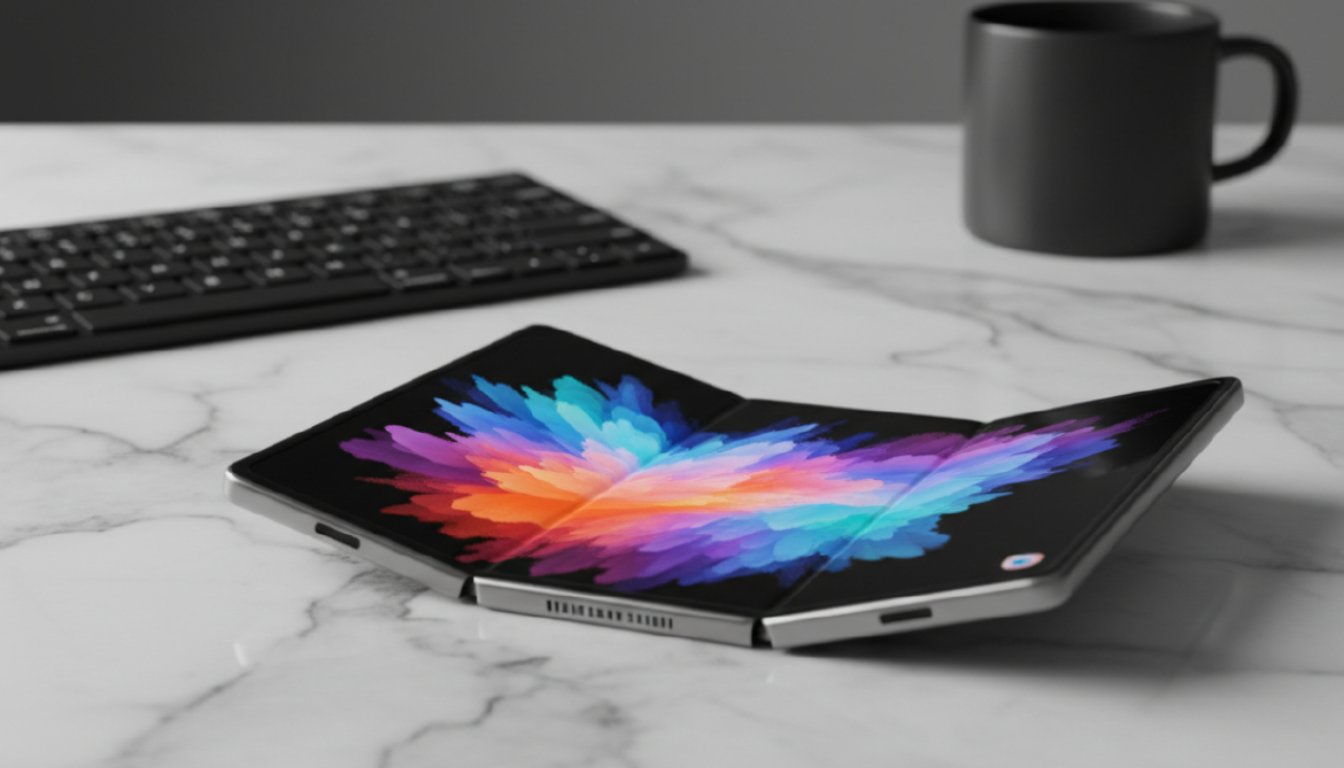
The landscape of mobile technology has undergone a seismic shift since 2019, a year that marked the birth of the modern foldable era led by industry giant Samsung. Although the Royole FlexPai technically pioneered the category, it was Samsung’s earlier foldable models that truly brought the concept into mainstream awareness. After years of iterative updates to the standard folding format, many critics suggested the industry had hit a plateau. However, the introduction of the Samsung Galaxy Z TriFold has shattered that narrative, proving that the dream of a true phone-tablet hybrid is not only alive but more refined than ever.
The Evolution of the Foldable Frontier
For several years, the foldable market felt like it was stuck in a predictable cycle. Brands like Google, OnePlus, Oppo, Vivo, and Motorola all launched impressive devices, but the core formula remained the same: a cover screen and one internal folding panel. Samsung has now disrupted this status quo. While Huawei’s Mate XT was the first to market with a tri-fold design, the Samsung Galaxy Z TriFold brings a level of engineering polish and software integration that aims to set a new global benchmark for the category.
Design and Engineering
The primary appeal of the Samsung Galaxy Z TriFold is its ability to transform from a standard-looking smartphone into a full-scale 10-inch tablet. When folded, the device maintains a manageable 6.5-inch cover display profile with a thickness of roughly 12.9mm. While slightly bulkier than a standard slab phone, it remains remarkably pocketable given the hardware hidden within.
The Hinge and Chassis
Samsung has utilized dual titanium hinges to manage the complex Z-folding movement. The frame is constructed from an advanced armor aluminum alloy, providing a rigid backbone for the three separate display panels. One of the most impressive feats is the thickness—or lack thereof. At its thinnest point, the device measures a mere 3.9mm, expanding to 4.2mm at its thickest internal section. To ensure longevity, the company has verified the mechanism through 200,000 fold-and-unfold stress tests.
The Folding Experience
Unfolding a device with two separate hinge points requires a slight learning curve. The sequence involves opening the left panel followed by the right. To assist users during this transition, Samsung has implemented a haptic feedback system and software alerts that notify you if the folding sequence is being forced incorrectly. At 309 grams, the phone feels evenly balanced, but its extremely slim unfolded form does create a fragile feel that users should be mindful of.
Samsung Galaxy Z TriFold Technical Specifications
| Feature | Specification Details |
|---|---|
| Main Display | 10-inch Dynamic AMOLED 2X, 120Hz, 1,600 nits peak brightness |
| Cover Display | 6.5-inch Dynamic AMOLED 2X, 2,600 nits peak brightness |
| Processor | Qualcomm Snapdragon 8 Elite for Galaxy |
| Memory (RAM) | 16GB LPDDR5X |
| Primary Camera | 200MP Wide (f/1.8) with OIS |
| Secondary Cameras | 12MP Ultra-wide, 10MP Telephoto (3x Optical Zoom) |
| Selfie Cameras | 10MP (Cover) and 10MP (Internal) |
| Battery Capacity | 5,600mAh (Three-cell system) |
| Charging Speed | 45W Wired, 15W Wireless |
| Durability Rating | IP48 Water & Dust Resistance |
Software Innovation: Beyond the Hardware
Hardware is only half the story; the Samsung Galaxy Z TriFold truly shines when you engage its software ecosystem. The massive 10-inch real estate allows for a much more productive multitasking experience than the 8-inch screen found on the Galaxy Z Fold 7. Users can now run three full-sized applications side-by-side without the UI feeling cramped.
- Multi-Active Window: Seamlessly drag and drop content across three apps.
- Independent Samsung DeX: The device can trigger a dedicated DeX mode directly on its own screen, effectively becoming a mini-PC when paired with a wireless keyboard.
- Aspect Ratio Optimization: The 16:11 ratio is perfect for document editing, spreadsheet management, and cinematic media consumption.
Pros and Cons: The Balancing Act
Pros
- Unmatched Screen Real Estate: The 10-inch panel is a game-changer for mobile productivity.
- Build Quality: Use of titanium and ceramic-glass fiber reinforced polymers provides a premium feel.
- Performance: The Snapdragon 8 Elite provides desktop-class processing power.
- Software Maturity: One UI handles the transition between folded and unfolded states flawlessly.
Cons
- Learning Curve: The folding sequence takes time to master.
- Fragility: Despite the IP48 rating, the slim 3.9mm profile requires careful handling.
- Price and Availability: Limited regional availability makes it a difficult device to acquire.
Why This Matters ?
The Samsung Galaxy Z TriFold isn’t just another smartphone launch; it represents the end of the “innovation drought” in the mobile sector. For tech enthusiasts and professionals, this device signals that we are finally moving past the era of incremental upgrades. The ability to carry a device that replaces both a phone and a high-end tablet like the iPad Mini or Galaxy Tab S series in a single pocket is a technological milestone that will likely dominate tech headlines throughout 2026.
Conclusion
The Samsung Galaxy Z TriFold is a triumph of engineering that successfully bridges the gap between portability and massive screen utility. While it may be too niche or expensive for the average consumer today, it serves as a stunning blueprint for the future of mobile computing. If you are a power user who thrives on multitasking and cutting-edge tech, this device is the current gold standard of what a smartphone can be.